
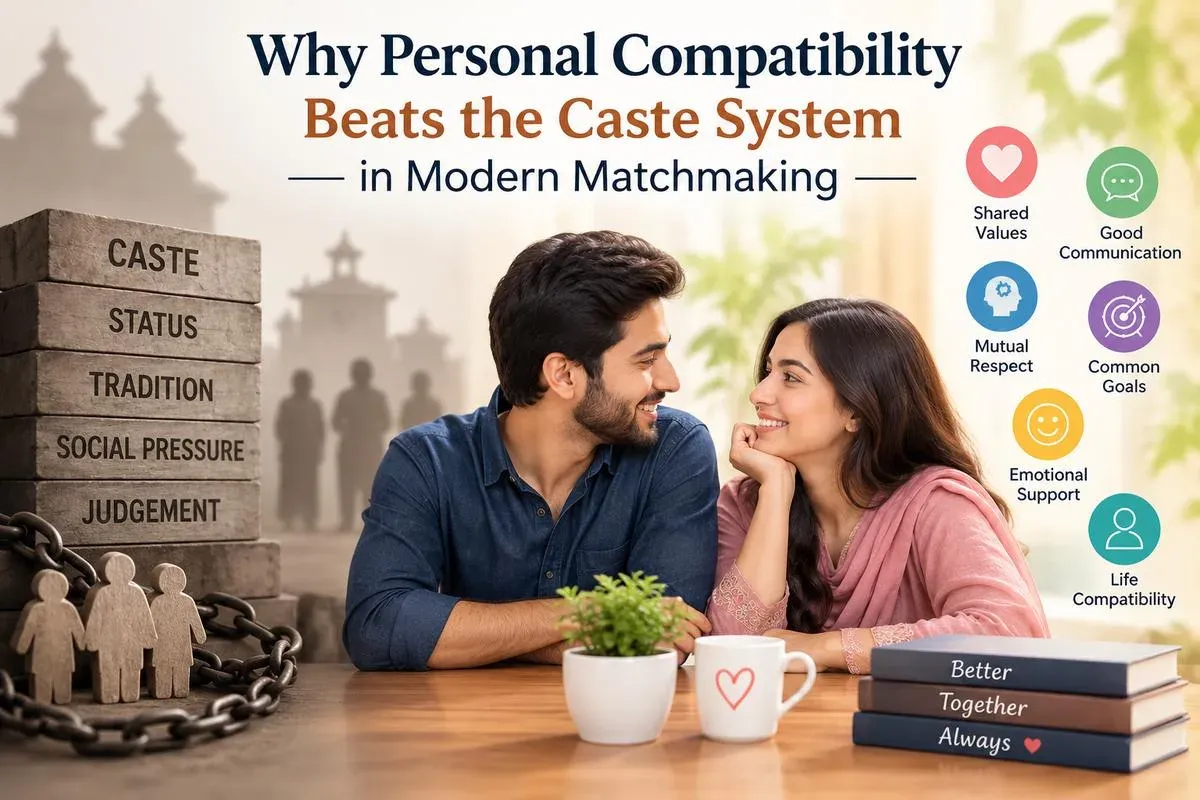
For generations, the first question in a rishta meeting was about family background: which caste, which biradari, which clan. That made sense in a world where families lived close together and marriage was mostly a bond between households. Today most couples live independently, build careers, and share a life that looks very different from their grandparents’. So many families now ask a different question: are these two people actually compatible?
What Is Personal Compatibility in Marriage?
Personal compatibility is how well two people fit together in the ways that shape daily life. It is not about being identical. It is about sharing a foundation and handling differences respectfully. The main areas are:
- Core values: religion and how it is practiced, honesty, family responsibility
- Life goals: career plans, where to live, when to have children
- Lifestyle: daily routines, spending habits, social life
- Communication: how each person handles disagreement, stress and feelings
- Education and mindset: how they think about work, roles and growth
These are the things couples live with every day, long after the wedding.
The Caste System in Marriage: Where It Falls Short
Caste and biradari preferences usually come from good intentions. Families want shared customs, a familiar social circle and a sense of security. Those are real concerns, and they deserve respect.
But the caste system in marriage measures background, not the person. Two people from the same caste can differ completely in values, temperament and expectations. Two people from different castes can be deeply aligned. When the caste filter comes first, families often shrink their options before they have even met someone who might be right. A strong, well-matched candidate gets rejected on one label.
It also puts pressure on young people. A rishta that looks perfect on paper but feels wrong in conversation often leads to years of quiet struggle.
Why Modern Marriage in Pakistan Is Changing
Modern marriage in Pakistan looks different from a generation ago. Women and men are more educated, many women work, and couples often live in nuclear households or in different cities from their parents. In that setting a shared outlook matters more than a shared surname. Partners have to make decisions together: finances, careers, how to raise children, how to look after both sets of parents.
Many parents see this too. They still want to be involved, and they should be. But more of them now say the same thing: “Let us look for a good person first.”
How Modern Matchmaking Works Differently
Modern matchmaking starts with the individual rather than the lineage. A good process usually involves:
- Understanding the person: values, expectations, deal-breakers and lifestyle, not only age, height and caste
- Matching on compatibility: shortlisting profiles that fit on what matters most
- Including the family: parents stay part of the conversation, and their preferences are weighed, not ignored
- Meeting with purpose: conversations that explore how the two people think and communicate
This is why many people now prefer a professional matchmaker or a trusted matrimony site to random proposals through relatives. A structured process saves time and avoids the awkwardness of repeated rejections.
Does This Mean Family and Culture Do Not Matter?
No. Compatibility does not mean ignoring family or culture. Respect for elders, shared faith and cultural comfort are part of many people’s compatibility. The difference is that they are weighed alongside personality and values rather than being replaced by a single filter. Caste can be one preference among many, not the gate everything else must pass through.
Tips for Families Looking for a Compatible Rishta
- Write down your top five non-negotiables. Values and character should be on the list, not just background.
- Keep your search criteria flexible. A slightly wider search often finds a much better match.
- Let the two people talk. A real conversation tells you more than a profile.
- Ask about the future. Career plans, living arrangements and family expectations should be discussed before commitment.
- Use a reliable platform. Choose a service that verifies profiles and lets you filter by what actually matters to you.
Find a Match Based on Who They Are
A lasting marriage is built on trust, respect and shared goals. Those come from the people, not from a label. Whether you are looking for a rishta in Lahore or anywhere in Pakistan, begin with compatibility and you will give your family the best chance at a happy match.
Ready to start? Explore verified profiles on ShadiMarkaz.com, or talk to our VIP Shaadi team for personal, compatibility-based matchmaking.